

I originally pitched PUNCH as “Your pop culture haymaker,” which still feels right; the difference is that this version is leaner, meaner, and less interested in feeding the scroll. Think of it as a compact dispatch on culture, media, status theater, institutional nonsense, and the kind of internet pathology worth dragging into the light.
The Strokes turned Coachella into a protest reel with guitars

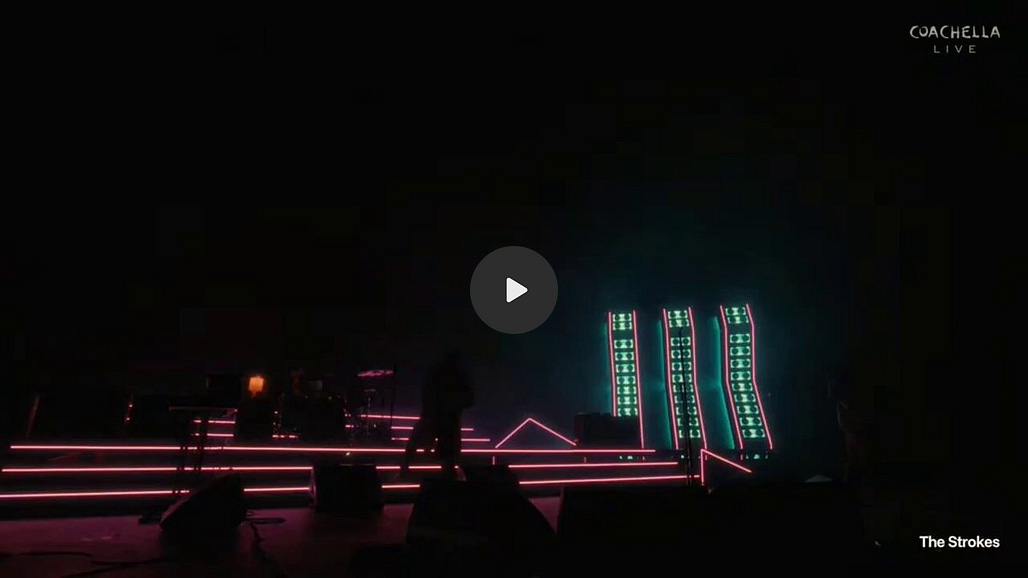
The Strokes closed their Coachella set by pushing the festival’s giant screens into open political theater. A video montage reportedly showed leaders allegedly targeted by the CIA alongside footage and references tied to Gaza and Iran, while social posts from the set circulated clips of the final visuals and Julian Casablancas’ onstage crack about the coming military draft. The result was less “rock band says something vague” and more a direct attempt to end on accusation, not uplift. Predictably, the discourse split between people calling it one of the weekend’s few genuinely risky gestures and people acting shocked that Julian Casablancas still enjoys antagonizing authority. (Consequence)
A jury finally called Live Nation what concertgoers already knew it was
A New York jury has found Live Nation and Ticketmaster liable for illegally monopolizing major parts of the live-events business. Nice to see the legal system eventually catch up to what everyone who has paid $94 in fees to stand behind a pole already understood in their bones.
This does not instantly fix ticket prices or magically un-inflate the whole racket. The next phase is remedies, which is less exciting than revenge but still useful. Even so, it is one of those rare moments when a giant cultural scam gets described in plain English: live music became a luxury product routed through one giant choke point, and now that arrangement has finally been called what it is.
Frank Ocean updated the webshop and everyone reported to feelings duty
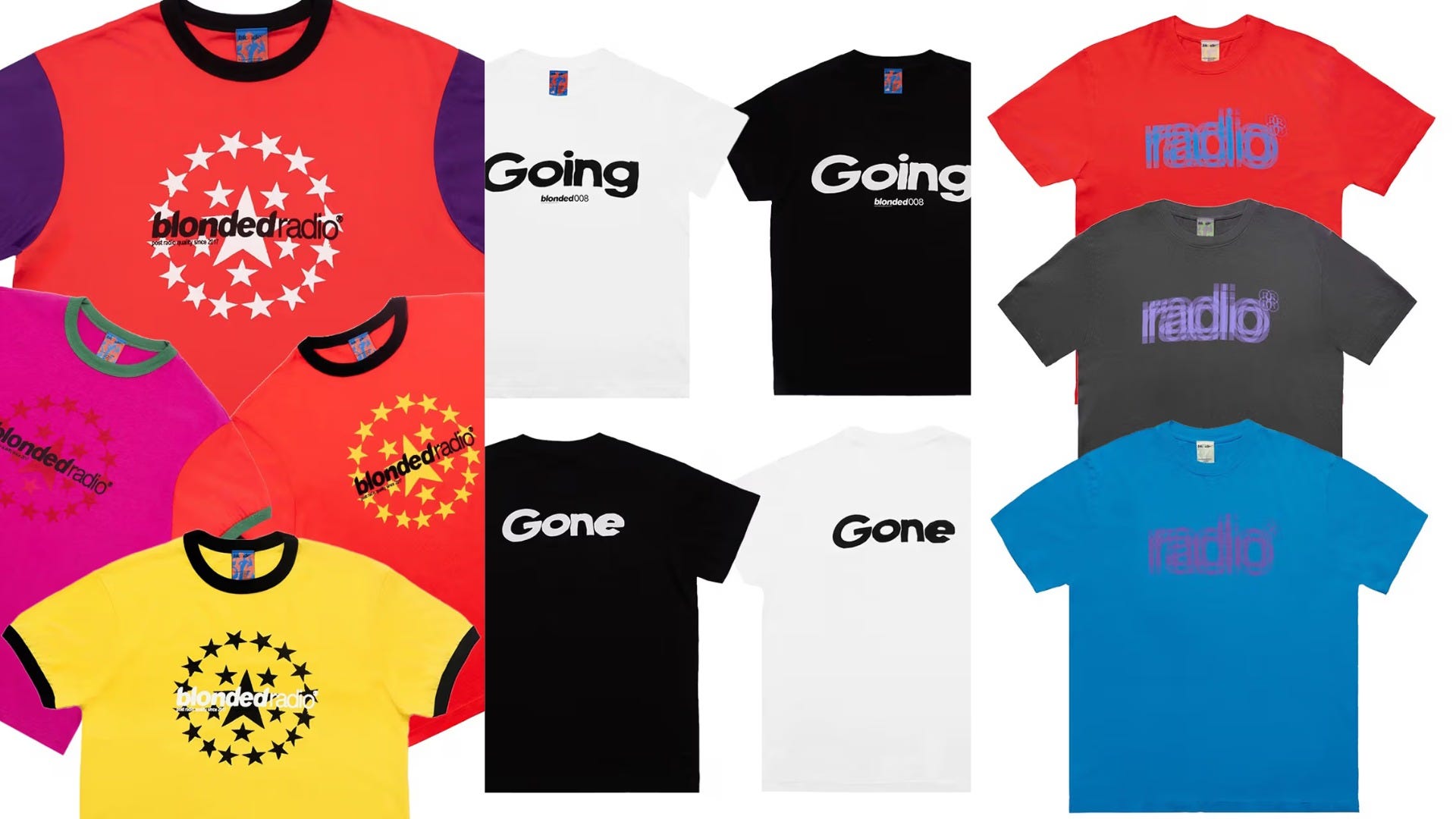
Frank Ocean followed last week’s channel ORANGE and Blonde vinyl restocks with a fresh Blonded merch drop, adding three new T-shirts while the vinyl stayed live on the site. Blonde is listed at $65 with a lyrics foldout and poster, channel ORANGE at $69, both with a 2–6 week fulfillment window; Blonded’s help page also notes that sales are final and mixed orders ship only when everything is in stock. None of this is a song, obviously. But Frank has trained people to treat an online storefront like a seance, so here we are, once again reading cotton and inventory timing as emotional intelligence.
Milan Design Week is back to turning chairs into class warfare
Milan Design Week 2026 runs April 20–26, with Fuorisalone spreading across the city and Salone del Mobile’s 64th edition taking over Rho from April 21–26. Organizers are touting more than 1,900 exhibitors, 36.6% from abroad, over 169,000 square meters of sold-out exhibition space, and well over 1,000 citywide events spread across Brera, Tortona, Isola, Porta Venezia, and the rest of Milan’s annual map of tasteful congestion. Every year this thing manages to present a lamp as a worldview and a chair as a diplomatic weapon. That is the charm and the scam.
Martin Wong gets the rare revival that actually makes the case
Chicago’s Wrightwood 659 has opened Martin Wong: Chinatown USA, a large survey of more than 100 works revisiting his Chinatown imagery, while New York’s P·P·O·W is staging Martin Wong: Popeye, focused on his fixation with comics, tattoos, and lowbrow iconography. That pairing is smarter than the usual retrospective cleanup job. One show leans into inherited fantasy, ethnic theater, and Wong’s outsider relation to Chinatown; the other into brick patterns, cartoons, and subcultural American vernacular. Together they make Wong look less like an art-world cult figure and more like someone building his own symbolic language out of belonging, performance, and urban myth.
Hlynur Pálmason turns a breakup into a haunting domestic weather system
Hlynur Pálmason’s The Love That Remains (now on VOD) turns a family breakup into something bruised, intimate, and a little uncanny, using gorgeous 35mm images and a drifting, vignette-based structure to catch the weird sadness of love curdling into shared routine. It finds real feeling in the small domestic details and the quiet humiliations of separation, but its loose, elliptical approach can also feel so withholding that the emotional payoff starts slipping through your fingers.
Edmonia Lewis finally gets the retrospective history kept dodging
The Peabody Essex Museum’s Edmonia Lewis: Said in Stone is the first major retrospective devoted to the 19th-century Black and Indigenous sculptor, bringing together her work in a way institutions somehow failed to do for more than a century. Lewis made Forever Free in 1867, widely regarded as the earliest known formal depiction of emancipation by a Black American artist, which means the show lands as more than rediscovery. It is a correction. The basic scandal is that someone this foundational still has to be introduced like a lost figure instead of a pillar.
Japanese women’s wrestling is bringing a title fight to the Hammerstein Ballroom
Sukeban, the Japanese women’s wrestling promotion that looks like sports entertainment after a fashion week concussion, is bringing its World Championship Fight to New York on May 19. The Hammerstein Ballroom event features 22 wrestlers, including reigning champion Ichigo Sayaka, which already sounds more alive than most of the prestige content currently being force-fed to the culture.
It is also unveiling new Cherry Bomb costumes with Nike, because even beautifully unhinged spectacle now arrives with brand architecture. Still, this is the right kind of crossover slop: title-fight stakes, maximalist personas, and a level of visual commitment that makes ordinary live entertainment look like it got dressed in the dark.
Kristen Stewart’s first film bleeds all over the frame, and Imogen Poots keeps it human
The Chronology of Water (now on VOD), Kristen Stewart’s directorial debut, is carried by a raw, full-body performance from Imogen Poots that keeps the whole thing from floating off into pure anguish cosplay. It’s visceral, fragmented, and deliberately intimate, turning trauma and rebirth into something felt more than neatly explained, though the film’s nonstop assault of pain and aggressive stylization can, at times, start admiring its own wounds a little too much.
Your imaginary boyfriend is already checking your likes
There is, unfortunately, a whole subreddit for people intentionally creating sentient mind-companions. On r/Tulpas, users treat a tulpa as a mental companion that can develop its own will, emotions, and opinions, which is already a strong sign that the group chat should maybe be muted for a while.
Naturally, this immediately mutates into relationship discourse. One poster complained that a tulpa created days earlier was already acting jealous and possessive over social media likes. Loneliness really said fine, I’ll make my own boyfriend, and then accidentally gave him surveillance instincts.
ADÉLA’s “KGB” stomps in like the night has already been warned
ADÉLA’s new single “KGB” feels engineered for a very specific kind of entrance: dramatic, polished, a little hostile, fully aware of the mirror. The production is glossy and aggressive without collapsing into sludge, and ADÉLA sells the whole thing with that cool, taunting poise pop stars need when they are trying to make attitude sound expensive. The track’s appeal is not subtlety. It is force. High-camp, tightly wound, and built to stalk across a room rather than beg for it.
Pearly Drops and Night Tapes made a comedown song for people with good taste in despair
“Fade to Black” sits in that plush late-night zone where dream pop, electronic haze, and emotional distance all start sharing a coat. Pearly Drops and Night Tapes keep the track light on brute force and heavy on atmosphere, letting it drift with the kind of soft-focus melancholy that feels less like heartbreak than elegant depletion. It is beautifully controlled. Not a meltdown, not a banger, more like the exact song your brain plays when the night is over and you are not.
Headline curation and words by Tag Brum (@tagbrum)
Cola - Skywriter’s Sigh
“Skywriter’s Sigh” feels lean, flickering, and a little worn-in around the edges in a good way. Cola still sound most convincing when they resist overstatement, letting nervous guitars, clipped momentum, and Tim Darcy’s coolly frayed delivery do the work. If this is the album closer, Cost of Living Adjustment looks built less around big release than slow, exact pressure.
Headline curation and words by Tag Brum